Showing posts with label plants. Show all posts

Monday, January 14, 2013

Tropical Terrarium Build (part 2)

First, a little catching up after the holidays!

Regrettably, my moss project didn't go so well.  I think it was due to a poor mixture and lack of sufficient natural lighting.  I think I'll give it another try in the spring, after the melt, when the moss will be accessible.  This time, I'll give the beer recipe a try.  Or maybe even both yogurt and beer, for a comparative analysis.

I've also got a bunch of new pics to put up!  Lots of new things in both my leo's habitat and my tropical terrarium.  My leo's build has been completely upgraded, tank and all.  For Christmas, I got the Exo-Terra Medium Low terrarium; much nicer than an old aquarium!  I'll get into that on a different post.

For now, I'll showcase my tropical terrarium.

***


Behold, the final product of my tropical build!

It's not quite what I had envisioned, but I'm satisfied with it.  I was obviously hoping for a little moss in there, but I may yet be able to culture some and transplant it.  In the meanwhile, I bought some Zilla Premium Compressed Frog Moss to toss around  for a little extra splash of green.  I'm glad I didn't try to stick it down; it works much better just fluffed about.  The colour can be a little dominating if I put too much of it in one spot. 

Also note that my plants have been trimmed down and separated.  I mixed up my pothos a little, so I hope that they won't be in direct competition for root space.  The gold pothos (just visible on the right) is doing fine.  It's sprouted a couple new leaves in the time since it's planting, meaning that it is doing well.

I was having some trouble with the philodendron and sansevieria (snake plant), however.  When I put the Zoo-Med Hydroballs in, I oversaturated the soil.  This lead to me loosing a couple philodendron leaves and a sansevieria stalk to overwatering.  Still, being fairly hardy plants, they've totally bounced back.  The philodendron has also sprouted two new leaf, which are not visible in the above image.  Some of the individual pothos plants are withering off, but some have also sprouted new growths, kind of averaging it out.  The sansevieria is now my cresty's favourite resting spot.  He wedges himself between the leaves, almost completely concealed.  I wish he'd take advantage of the log hideout I built him, but I'm just glad he's enjoying the plants.

I've still got to install the Monsoon system from my old tank, although for now, my hand mister is doing fine.  As a side bar, I'll most likely be revisiting my review of the Monsoon system eventually, as I've had some issues with it since.  One of the tubes is also in need of a little patch job.  A drop or two of silicone should solve the issue.

In later pics, you'll see the substrate layers; drainage, mesh, and substrate layer.  The substrate is a combination of three Exo-Terra products: Exo-Terra Jungle Earth, Exo-Terra Tree Fern Substrate, and Exo-Terra Plantation Soil (brick format).  The mixture I used is as follows:
-2 parts plantation soil
-1 part tree fern substrate
-1 part forest soil
This gives me a really nice, fairly natural substrate that is both visually appealing and thus far totally functional.  Plenty of drainage and a good amount of water retention.

I've also added a couple extra pieces of wood, drift wood and grapewood.  I originally planned to use them for the leo tank, but once again, my eyes are bigger than the physical space of my tanks.  It's all worked out though, since they fit perfectly into the tropical tank.  They give even more jumping and climbing platforms, and help to break the line of sight.

The overall effect has been fairly noticeable.  Humidity has been stable at the 50 to 70 percent range, and temperature has been holding at 20 to 25°C.

Psycological effects have been noted as well.  Rocza's a little less intimidated by my presence, he eats more freely from my fingers, he's actually walked up to the glass and observed me, and he's gone as far as jumping at my fingers as I worked to place some wires around the outside of his tank.  I'm fairly sure it was the twiddling movements that set him off.  I placed my hand in right after and he recognized it at once, and tryed to lick Repashy off my fingers. 

But enough analysis, time for some more pictures!

The philodendron leaf on the left covers the feeding dish, giving the gecko a better
sense of security while he eats.  Having the dish on the door also simplifies cleaning.

Formerly, the newest leaf of the philodendron.


Jade pothos, now a little more worst for where.

Here, we see the pothos wrapped around the grapewood, as well as the log hideaway.  And Rocza, of course.


Next post, I'll show off the third phase of the leopard gecko build, talk about some new product I'm trying out, do a little research into yet another animal I'd like to acquire, and post plenty new pictures.  Hopefully, it won't be another month till then!

Sunday, November 4, 2012

Research into Custom Natural Habitats 3: Growing Moss

My black silicone came in, finally!  So now that I've started putting substrate to the foam, I'm looking into my next step; growing moss.

Since my attempt at transplanting moss failed epically, I'm trying the 'moss paint' method.  There are a couple different recipes I came across: moss and beer, moss and buttermilk, moss and plain yogurt.  I chose yogurt as it was cheap, it came in a small format, and to me it would have a more paint-like consistency over the other two options.

I also read and interesting idea on caudata.org (a forum for caudata enthusiasts) that involves using fish emulsion fertilizer to jump-start the moss' growth.  After doing a little searching, I found that one of the local types of fish emulsion is Muskie 5-1-1 fertilizer.  I had a hard time pinning it down in stores, most likely because it's November.  Finally found some at Marlin's Orchard; a very nice orchard and garden store just outside of town.

The recipe I used is as follows:
-1 cup of plain yogurt
-3/4 cup of moss clumps
-couple pea-sized globs of fish emulsion

Blend thoroughly and apply to surface. Mist daily and keep in a cool, shady spot.

I also went one step further and decided to apply some fish emulsion as a base before pouring on the mixture.

See here is what the mixture looked like once blended.  I think I may up the moss ration; the mixture was pretty thin.
 Just as an experiment, I applied it to four different surfaces, coating half the surface with fish emulsion and leaving the other half bare.  My four materials are a piece of fire wood, a flat stone, a brick, and a plastic cover.  This way, I can determine what my moss will grow on, and if pouring it over fish emulsions will make it grow faster or not.

Not shown is the plastic cover experiment.
Note: I've read that mould will appear, but that it doesn't mean that the moss is ruined.  I guess the moss will grow in after.


Wednesday, August 29, 2012

More Plants

For part two of today's posts, I'm showing off the newest plants I got for my cresty build. To be fair, "new" is relative, as I have had these for a couple weeks now, and despite a little feline intervention, the majority of them are still alive!

Firstly, I picked up another pothos, but instead of a Jade pothos, I picked up a Gold pothos.
I also found this really nice philodendron which has the best leaves ever! Perfect for a shy little gecko to chill out on. As time goes on, the leaves will develop splits and become more articulated. It also spreads fairly well, I'm told, so I'll be trimming it fairly often.

Also, I finally found the perfect sized snake plant, which sadly became the target of a cat attack and lost a couple leaves...
Lastly, and this one might not make it through to the terrarium, is this cute little Venus Fly-trap. I've fed it several times, forgetting that each "mouth" only feeds once before it dies. So, as a result, I'm left with a plant with very few mature "mouths". Still seems to be living though, so, yay!
Also, though I didn't technically buy this, I harvested a little moss from my back yard and have so far been able to keep it alive on nothing but a rock, so kudos to me!

I plan on incorporating most of these plants, if not all, and a couple more into my cresty build, which, as it happens, I'm currently in the process of building! Finally! I'll definitely post phase 1 tomorrow, when I have a few more things completed.


Tuesday, July 24, 2012

Got Wood?

First off, as promised, the pics of my new swag loot that I got the other weekend:


I did a bit of research into the mopani wood, since I want to learn how to get rid of the sap once and for all. I guess, from what I've read, I just have to keep soaking it and boiling it.

More disturbing are the horror stories I'm coming across of how the tannins can cause fungal grows, psychological disabilities in the animals, and a mess of other things. But then I read posts from people who've been using this stuff for decades. I think it's a case of improper preparation, personally.

Still enough to worry me though.

Side Note: I am still looking for a decent-sized pot to boil my wood pieces in. Got them soaking for now, but I want to boil them a couple times before siliconing them in place. I just wish I knew how much OSAP I'm getting this year! It's kind of my limiting factor as to what I can and can't buy. With all the (long) extra hours I've scored at my job, I should have enough spare cash to really trick out my tanks, at least if my price estimates are decent.

So my question today is this: 

Is mopani wood dangerous for reptiles, and more specifically, crested geckos?

From what I've been reading on Reptile Forums UK and Herp Center, it should be fine. Lots of people use it, and have been using it for years without any incident.
To be fair, the stories I read about where the animals developed neurological symptoms were talking about different species of geckos. And in all honesty, it doesn't seem unthinkable that some species have different reactions to different types of plants or wood.
My greatest fear is that once I've foamed my wood pieces in places, something will occur that will force me to remove them, along with my entire background. It's not like these tanks are cheap to decorate, so I want to get this done, and get it done right.

***

Next on my hit list is a bromeliad plant! Maybe a crawling vine too. I also need to repot that jade pothos, in order to remove as much of the fertilizer as possible.

Sunday, July 15, 2012

So many goodies!

I just got back from Ottawa today with a couple bags of funky stuff for both my terrariums. At Big Al's, I found some nice little pieces of mopani wood that I'm going to use as accents for both my tropical and arid terrariums, along with some Malaysian drift wood. On my way back across the plaza, I stopped in at Rona's garden center and was really surprised by this young guy there who was quite savvy about tropical houseplants. I bought a jade pothos plant, though I could have bought a lot more! They had snake plants and a whole mess of everything. Lastly, on my way past PetSmart, I stopped in for the heck of it and found a cork round. All in all, a pretty decent haul, and all of it for under 40$! I think I'm good for wood now. All I need is some fake rocks which I plan to make myself, some substrate and a couple other miscellaneous goods and I will be ready!

Also, I got my new top in from Stacey's, which I ordered a week and a half ago to replace my rusting one temporarily while I mod it up a bit. It looks like the tops I've been using up till now were Exo-Terra's older models, as this one isn't exactly the same. I'm hoping it will still fit, just to use it as a temporary lid. It was only 15$, after all, so I don't feel that bad. If it doesn't I can always return it.

Pictures to follow.


Wednesday, June 20, 2012

Research into Custom Natural Habitats 2: Backgrounds

A little late on my idea to post more findings for making the natural habitats but with studying for my chemistry refresher courses, the heat we've been having lately, as well fretting over tuition and grant money, it kind of got back-burnered.

Anyway, I found a really decent website for Do It Yourself naturalesque backgrounds called Bamboo Zoo, which links to several threads on Reptile Forums UK.
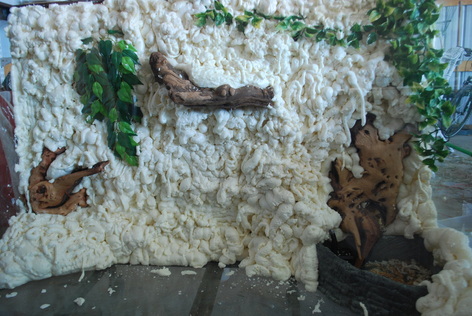
The setup I really liked was the Reptile Habitat in Foam by Hedy S., shown below. I've been trying to get a hold of some black spray foam from a guy at work, which is an idea I found on Youtube posted by bshmerlie which I will also post below. (Note to self, don't start Youtubing Skyrim soundtrack female covers!)
 What I like about Hedy's background is the way their mopani wood seems to grow out of the backdrop, something which I feel gives natural backgrounds some credibility. I also like how they added a couple synthetic plants as accents.

Image from BambooZoo
Now before I skip ahead to the part I like the most about Hedy's setup, here's the video posted by bshmerlie on how to create a spray foam background, hosted by Sherry. It's long, but very informative.

Just to note, I've been around to a couple places, even asked some of the contractors at work, and no one has even heard of black spray foam insulation in my part of town till just now. Not sure if this black Great Stuff is strictly an American product, but I certainly can't find it. Now what I like about Sherry's technique is how it stand up to wear and tear versus the generic white spray foam background. I think I might use a bit of a mix of black and clear acrylic, using the clear around the mopani wood to avoid black spots.

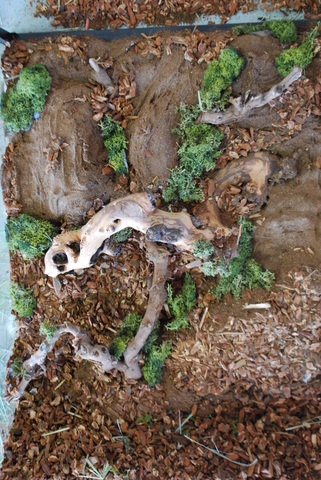
Now to get back to Hedy's setup, they use a mixture of substrates which really give it a natural feel. They even use a bark background, like the one Zoo Med but which I cannot seem to find on their product site.

The end result is this stunning piece of work.

Image from BambooZoo
What I really like is the mixture of the fine-grade Eco-Earth and larger Repti-Bark, both from Zoo Med.

I'd also really like to try to find a good way to grow moss on the mopani wood. Exo-Terra has the Tree-Fern Panels, but I'd like to know if they're in any way malleable once it's soaked. Also, I'd like to see if it actually does as advertised and grows small ferns and mosses.

So my shopping list is as stands:
-Spray foam insulation (preferably black)
-Aquarium-grade black silicone (I already have clear)
-Mopani wood (you can never have enough)
-Cork bark rounds (mix things up a bit)
-Plants
-Fine substrate (probably the bag format of Exo-Terra's plantation soil)
-Coarse substrate (some bark or coco husk)


And that's just for my cresty!
I'm planning a second upgrade for my leo already. He's very curious and loves to explore. unfortunately, all I have for him are aquariums which are more vertical than horizontal.
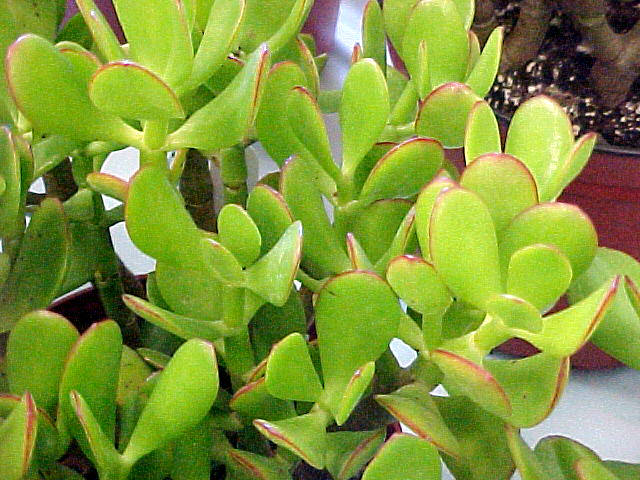
If I could get my hands on a nice-sized low and wide tank, I'd be happy. I'm also planning on introducing some greenery into his environment, like this Jade cactus.
Maybe some of my other synthetics as well, since it would be hard to keep his habitat dry like he needs it and still have nice plants. I'll work something out though. I'm also going to need some things for his hab.

-Sand (not as an actual substrate, but as a sub-substrate, jsut to hold the rocks off the tank bottom and stop crickets from hiding under them)
-Concrete grout (with which to cover my foam)
-Lizard-friendly sealant (to protect the grout)
-Large pebble substrate (to go over any sand that may be visible)


I have a lot to keep me busy, on top of all the things that currently keep me busy...

Tuesday, June 5, 2012

Some New Toys and Treats

First off, I found another place to buy some tropical plants!
The local orchard and garden center carries a variety of tropical plants, but not many of the ones I need or want. They can get some in, but that will most likely take a while. They carry gold and jade pothos, so I might mix them up and get a bit of variety. They also had a nice little cactus, one without thorns, that I though would look great in Bronka's habitat, especially once I get more rocks in.

But that's just a side note.

Surfing through cable last night, I found a special on photography of small animals with Catherine Chalmers and Rosario Dawson. It was terrific and I leave a link to Catherine's website for anyone interested in some really in-depth photography and art. The point is, I saw her Catherine photographing a leopard gecko and feeding it hornworms. I'm not sure if I mentioned before, but Stacey's Pet Depot sells hornworms, and I've been curious about them since I saw them. I've even wondered, seeing as these aren't true worms but caterpillars, if it would be a good idea to let the mgrow into their moth forms and try feeding them to Rocza. This idea seems a little ill-thought out. I guess the caterpillars can reach about 10 cm in length, so the moths are probably a decent size too. Much too big for little Rocza.
Anyway, I decided that after seeing Catherine's success with hornworms, I would try one out for Bronka, who might be having trouble catching the quick, little crickets. He absolutely devoured it. What I plan on looking into now is how many of these big guys I should consider feeding Bronka per week, as they do cost about ten crickets. They're not nearly as repulsive as meal worms though.

Image from University of Nebraska's Entomology Department


I was at Big Al's this weekend and found this awesome piece of mopani wood.


It's not small either. It's about 16 inches long and weighs about 4.5 lbs. I had to pick it up; just look at the cavity! Placed as it is in the picture, it would make a terrific natural hide. But, place it vertically and it becomes a really nice spot to plant a pothos plant or some other piece of greenery. I haven't decided who it's for yet. I think both Bronka and Rocza would enjoy it, but bronka already ahs a nice piece of mopani, whereas Rocza only has synthetic stuff for now. In any even, it's kind of big for either tank. It'll have to wait till after Christmas.

***
In other news, I haven't progressed much on my foam rock outcropping. I still need to finalize the design, but also, I need to save up a bit and get the mortar coating. I'm really thinking I'll be upgrading Bronka's habitat size in the coming year, as I feel he'd like to explore even more. Having come to that conclusion, I want to redesign some of the rock so that even if I choose to change the size of tank, it will still fit in decently.

Now, something has been troubling me for a little while now, and I feel this is the place to bring it to light.
I was in a pet store recently (not one of my local stores, fyi) and saw an African Fat-Tailed Gecko. It did not have a fat tail. It had a bony, emaciated tail, pointy ribs and boney legs. To be honest, from the way it was laying there, I'm not even sure it was still alive. And what really got me is that, surely lacking on site veterinary services, this store was most likely not going to do anything to help this little creature, as the price tag on it was only 40$. In other words, it's not worth their time.
This really got to me, but I feel like I really can't criticize them; what did I do to help this poor creature? I didn't have the money to buy it and set up a suitable habitat for it in order to attempt to nurse it back to health, but I feel that, had I approached them and asked to take it off their hands, they wouldn't of refused me. It was not their only Fat-Tail, and it was clearly on death's doorstep. Trying to appease my guilty conscience, I said to myself that I couldn't have done anything. But is that true? I have a friend who's sister is a veterinary technician. I may have been able to have her take a look at it and see if there was any simple way of improving this gecko's health. The truth is, being from a smaller city's clinic, she probably doesn't have much herpological experience, but still, this feeling nags at me.
I'm a very shy, reserved person, but that's no excuse to stand by and watch something die. At least, that's how I feel. It's quite possible this was just the end of the gecko's life, that it had lived out a decent life, but I jsut don't have that feeling. Pet stores don't necessarily have the best care for their animals, despite the fact that many do.
I think what I took from this experience is a guilt that will drive me to more the next time I see a situation like this. I just wish I had the courage to stand up more, especially for those that can't stand up for themselves.

Sunday, April 22, 2012

Ircksome Problem

I'm a little disappointed in the fake vegetation I bought so far. I was cleaning out my habitat the other day and noticed that the wire insert that keeps the plants positioned has broken out of the plastic casing. There was this fair-sized piece of jagged metal jutting from the stems of two of my three plants. What's more, these pieces were right where Rocza chills out. Obviously, I removed them from the tank. I'm thinking a small drop of acrylic on each would solve the problem. Just got to find me some and buy me some. I also though of maybe taking some of the plastic stem off and maybe melting it onto the metal shard.

I might end up getting some real plants sooner rather than later.

Friday, April 13, 2012

Research into Custom Natural Habitats 1: Plants

Ever since I started looking into crested gecko care on YouTube, I've noticed how nice natural habitats are, even when compared to high quality of the plant products by Exo-Terra and ZooMed. The look of real plants, growing as they see fit, makes for an esthetic quality that far surpasses that of the sterile setup. However, a natural habitat raises the difficulty level of keeping your habitat healthy and functional, as you now have your flora to care for as well as your fauna. The benefits aren't lost on me either; natural plants help keep a good humidity level and increase air quality.
I've recently started looking into crafting my own habitat in the hopes of creating a truly unique terrarium that will make Rocza feel more at home and that will add a nice touch of decor to my own environment.

***

Part 1: Plant Life

Even though I'm really excited to try my hand at foam sculpting and building, I decided to start by looking what will probably be the trickiest part of the project: the plant life. There are lots of forums and sites that talk about which plants make nice additions to a cresty's habitat, but it's never as simple as just picking out what looks good. I have to take into account what kind of lighting they need, weather or not they require special nutrients, and above all, if it's a good choice for an actively arboreal species of reptile.

To start off, I'm compiling a list of plants that other people recommend for crested geckos. Thus far, this is what I've got:

Pothos: I've noticed that both the golden and jade pothos plants are very appealing, broad of leaf, and look like a plant that could easily hang down from on high.
Jade Pothos
image from:http://www.sanfranciscoplantcompany.com/plants1.html

Golden Pothos
image from:http://www.sanfranciscoplantcompany.com/plants1.html


Sansevieria: I have a larger one of these in my house presently. It's a very nice colour, very sturdy leaf, and it grows in an extremely vertical fashion. It's also layered which could give my gecko a lot of shelter.
Sansevieria Black Coral (Black Coral Snake Plant or Mother-in-Law Tongue)
image from:http://realornamentals.com/plant-store/small-black-coral-snake-ornamental-plant.html
Amaranthus Tricolour: This plant is more for decoration that function, as it boasts really vibrant reds and yellows. Some other species of Amaranthus have leaves of red and green.

Amaranthus Tricolour (Joseph's Coat)
image from:http://store.underwoodgardens.com/Josephs-Coat-Amaranth-Amaranthus-tricolor/productinfo/F1004/
Ficus: A very leafy plant that also resembles the plants found in crested gecko natural habitat. It's thin branches and shoots are non-the-less capable of supporting the weight of an adventuring gecko.
Ficus Elastica (Rubber Fig)
image from:http://www.flowersbylana.com/everydayflowersplants.html
Ficus Benjamina (Weeping Fig)
image from:http://www.dreamstime.com/stock-photos-weeping-fig-ficus-benjamina-in-pot-image18877453
Bromeliad: A very esthetically pleasing tropical plant, bromeliads form natural hideouts for little animals. Some can even form small "ponds" in the cup-shaped center of their leaves.

Blushing Bromeliad
image from:http://www.dkimages.com/discover/Home/Plants/Ornamental-Groups/Bromeliads/Neoregelia/Neoregelia-carolinae-Tricolor/Neoregelia-carolinae-Tri-2.html
These are just the most common suggestions. From what I can tell, any plant that provides shelter, can support the weight of an adult gecko, and isn't outwardly poisonous, is a viable option.
I'd also love to find ways of having real mosses in the habitat. They always add a really beautiful touch of green to any environment.

However, after a bit of initial research, I can already start ticking off certain species due to light requirements. According to the San Francisco Plant Company (from which I pulled a couple of the above pics), ficus need a lot of sunlight, which wouldn't be a problem if I was still using my UV blub. My decision to stop using the UV bulb came after talking with Emily of Pet Depot, who informed me that crested geckos can actually get sunburned. On top of that, they don't have eyelids, and I can imagine that a daily dose of UV light might cause some eye damage after extended exposure.
The amaranthus tricolour is another plant that needs a good amount of direct sunlight, so it can probably be forgotten in my case. The most my plants will be getting is a small amount of early morning direct light, but mostly they'll have indirect light, provided from my shuddered southward-facing window.\
The other plants seem to be well suited to indoor life, particularly the sansevieria, to which I can attest is a very hardy plant, capable of surviving much abuse and neglect. Even the bromeliads, some of which are really colourful, can thrive in interior conditions.

Being that I've only dipped my toe in the pond on the topic of indoor plant care, I've still got a lot to learn about plant nutrition. Again, personally, I can attest that the sansevieria is hardy enough to get by jsut fine with it's occasional watering. Then again, it was originally planted in fertilized soil, something I will really have to look into to ensure I don't end up poisoning my gecko. In any event, Crested Gecko Canada gives an idea of how I could use fertilizers or special nutrients without worrying. According to them, a bit of mesh under a layer of substrate should be enough to keep the gecko out of contact with treated soil. Still, I really want to look into organic options to feed my plants, just to be safe. I also had the idea of double potting my plants so I could remove them easily if I ever needed to give them some special care or feeding. It might interfere with the natural look of the enclosure though, but it's still an idea I had. Much more research is required on this matter.

Now, I decide to think about weather or not these plants are the right fit for my crested gecko. Luckily, since these plants were presented to me by crested gecko care forums and websites, I'm fairly confident that they fit the bill. But the reasons for that vary by plant. The pothos and the ficus have big flat leaves, perfect for a timid little gecko to hide under or to climb on. The pothos in particular interests me as I think I'll be able to plant it in a high corner and have it hang down as a good vertical access. Of course, I could always string it along something like my Exo-Terra Jungle Vine, which would make it work as a horizontal means of travel too. The sansevieria is also another means of vertical access as well as a refuge. Another refuge plant could be the bromeliad, with its long, broad leaves forming a safe little cup for something like a gecko to sleep in or draw water from. And the moss I'd like to grow would make a terrific moist bedding for any reptile or amphibian. The joseph's coat also gives nice refuge in its big leaves, which would make a great bed for my gecko, if it weren't for the light requirements.

Now, this is just the begging of my horticultural research, and as such, I hope to find new species of plants to add to my list, as well as ascertain for sure weather or not the ones I've crossed out can or can't be used.
Also, let's not leave out the idea of using some of Exo-Terra's Smart Plants or some of ZooMed's more colourfully decorative synthetic plants, either. After all, they'd be a constant source of "foliage" in a habitat that could easily fall short of expectations. After all, there's no certainty when it comes to me keeping live plants.

Tuesday, January 31, 2012

Prepping my Terrarium (part 2)

Step 1: Cleaning

After opening the Exo-Terra Rainforest Habitat kit, I gave everything a good wash-down. The starter kit manual suggested the following :

Soak all plants and decoration with a solution of 1 part bleach to 30 parts water for about an hour once a month, which I did, except for the foam background and the jungle vine. I thought they might be too absorbent.

I find this kind of high on the bleach. One of the PetSmart reps said I could definitely get away with a smaller amount of bleach, but I decided to get Fluker's Super Scrub, which is an organic cleaner that "cleans and sanitizes" tanks, branches, rocks, vines, and bowls. To be fair, I did try to the bleach solution on my first batch of plants and decor, but I left them rinse well and sit for, so far, four days.

A point here regarding the Exo-Terra Jungle Vine (show in the image to the right):
I let my vine soak, not in the bleach solution though, for well over an hour to get the excess dyes out. This would be especially important if I were going to have it in an aquatic environment to avoid discolouration of the water, and maybe even negative effects to the critters.

Once everything was clean and free of the smell of plastic and bleach, I cleaned out the tank with a 50/50 mixture of water and vinegar (also recommended in the manual). The vinegar smell goes away pretty quick, too.

Weather or not I will continue to use these two home-brew solutions now that I have Fluker's Super Scrub, I haven't decided yet.

Just for the record, this is also when I installed my Exo-Terra Heat Wave, since it adheres to the bottom outside of the tank. (See Step 3)

Step 2: Decorating

So next, I added the Exo-Terra Rock Background in and placed my plants more how I wanted them to be in the final product.

I'd like to point out here that, although I do like Exo-Terra products, the suction cups that were provided for the Exo-Terra Croton and the Exo-Terra Amapallo were pretty useless, which suited me since I wanted to have the stems wedged into the background foam. Also, you have to kind of take all advertisement with a grain of salt; the rock background shown here on their website looks MUCH more realistic than the actual product, which is still nicer than having a picture taped to back of the tank.

You'll notice in the picture to the left, the jungle vine has been removed temporarily.

This is also when I placed my two thermometers and hygrometer. (Step 3)

Also, I want to add how much I really like the Boston Fern included in the kit. All the plants really, I found to look very good for plastics.

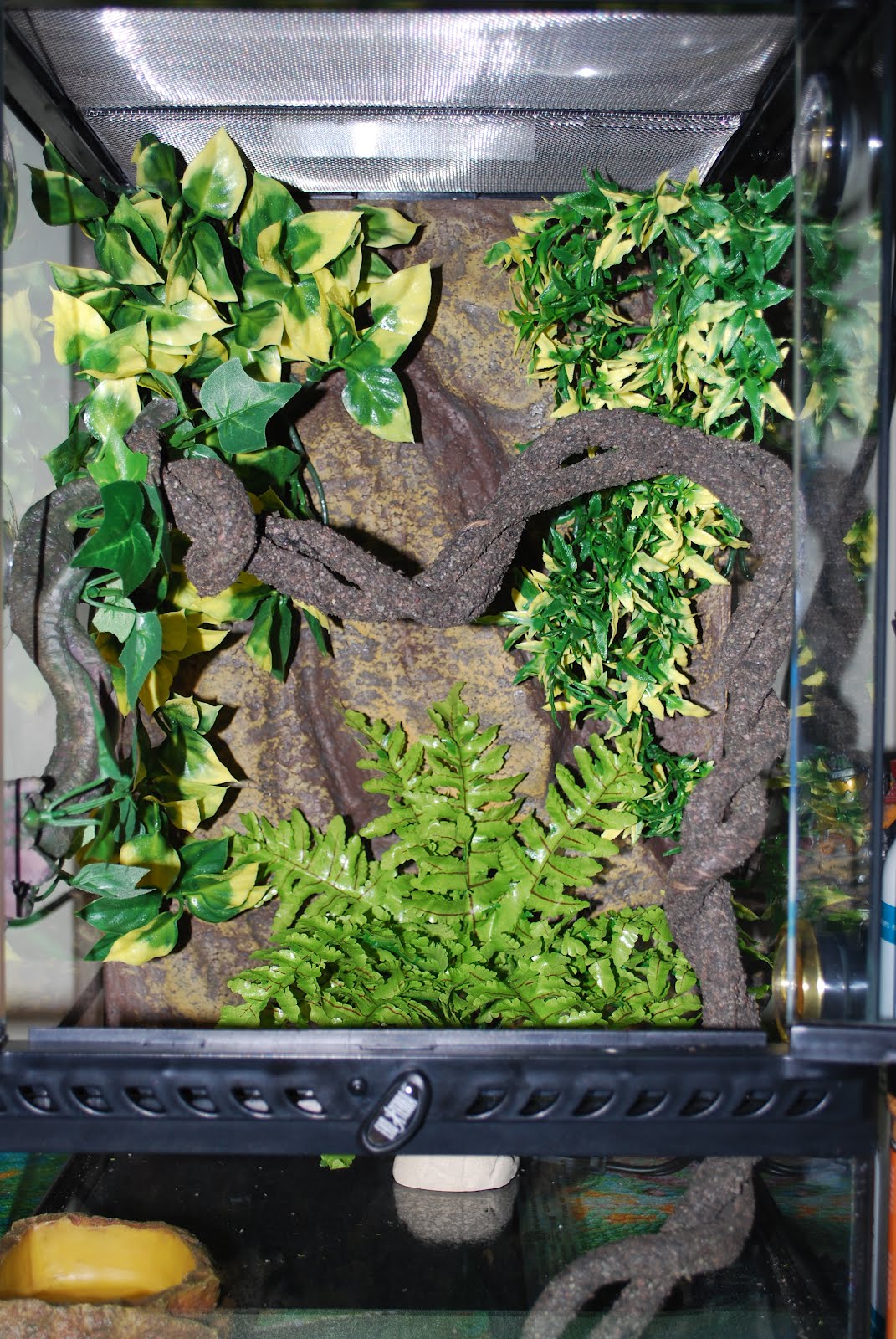
The final result was something to this effect:


Notice in the close-up what I mean about the background looking a little less rocky and a little more foamy. Still though, like it!


The last step of decorating was the addition of a small fake branch by All Living Things. You want suction cups? This thing has two, and combined, you could raise the Titanic with these them! I added it to the left-hand side of the tank to assure an artistic look of symmetry that my future gecko will have plenty of things to climb on. I'm not sure what plant the branch tries to emulate but it looks like ivy to me.

Huzzah, the final product! Please note that I will be waiting till the last minute to add the Exo-Terra Plantation Soil Tropical Substrate, which was also included in the kit.


To be continued in part 3 (because it's starting to take too long to upload these damn images into one post.)